
Appraisers
Appraisal Technology
Business Growth
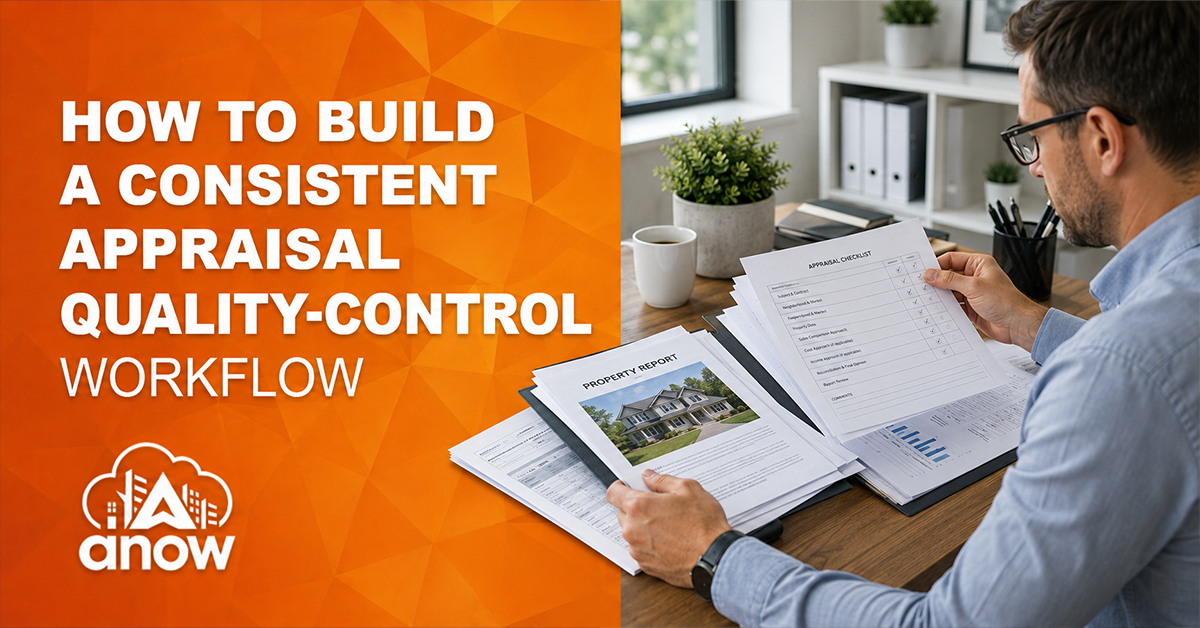

In the mortgage and appraisal space, speed means nothing if accuracy falls through the cracks. As regulatory standards tighten, lenders, appraisal management companies, and appraisal firms feel the pressure to deliver error-free valuations without extending turn times. Building a consistent quality control (QC) workflow isn't just about catching minor typos on a form. It is about creating an end-to-end, auditable pipeline that protects your business, maintains operational integrity, and keeps originations moving forward smoothly.
When quality control is handled retroactively or managed through fragmented spreadsheets and email chains, costly mistakes inevitably slip through. A scalable QC workflow shifts your team from reactive problem-solving to proactive operational control. Here is how to structure an airtight appraisal quality-control process that ensures compliance, simplifies audits, and keeps every party aligned from order entry to final delivery.
A dependable QC workflow relies on structured, progressive checkpoints rather than a single, rushed review right before delivery. Breaking the evaluation process into logical steps allows your team to catch errors early when they are easiest to fix:
Ambiguity is the enemy of operational efficiency. Every single step in the QC pipeline needs a clearly designated owner so tasks never sit in limbo. Appraisers maintain responsibility for data integrity, local market analysis, and physical property observations. Internal reviewers focus on market methodology, compliance flags, and adjustment logic. Operations managers monitor overall turn times, review queues, and vendor performance. When everyone understands their exact role at each stage, internal bottlenecks drop significantly.

When an appraisal flags an anomaly, such as a missing photo, an unverified comparable, or an unadjusted property variance, the revision process must be precise. Scattered email threads lead to miscommunication, lost files, and unnecessary friction. Implementing structured exception triggers allows reviewers to send revision requests directly back to the appraiser with specific, actionable feedback. Tracking these requests inside a unified system ensures that revisions are completed quickly without creating administrative confusion.
With the industry transitioning toward updated valuation data standards like UAD 3.6, compliance demands total transparency. Lenders and management organizations must be able to produce an immutable record of every action taken on an appraisal file. A robust QC workflow automatically logs time stamps, reviewer notes, flagged exceptions, appraiser responses, and historical changes. If an auditor comes calling, your system should allow you to export a complete, chronological trail of the appraisal lifecycle with zero guesswork or missing data.
File management errors represent a massive compliance liability. Accidentally delivering an outdated draft or an uncorrected report to a lender or borrower can trigger costly delays and regulatory red flags. Final delivery approval should always be tied to system readiness, unlocking only after all automated compliance checks pass and required reviewer sign-offs are secured. Enforcing strict version control guarantees that the report delivered is always the final, verified version.
Building this level of consistency across your operations requires software engineered specifically for modern valuation management. Centralizing your communication, task tracking, and platform management is the fastest way to enforce operational standards while driving efficiency.
Tools like AnowConnect provide lenders, clients, and appraisers with real-time visibility into report progress, status updates, and secure file sharing without relying on manual emails or fragmented communication channels.
Managing internal review queues, detailed version histories, and appraiser assignments becomes straightforward with AnowOffice. It gives your operations team the centralized hub required to track review progress, log comprehensive audit trails for UAD compliance, and execute final delivery approvals with confidence.
By standardizing your review stages, assigning clear team responsibilities, and leveraging modern management platforms for complete tracking, your business can consistently deliver top-tier valuations while protecting your bottom line.